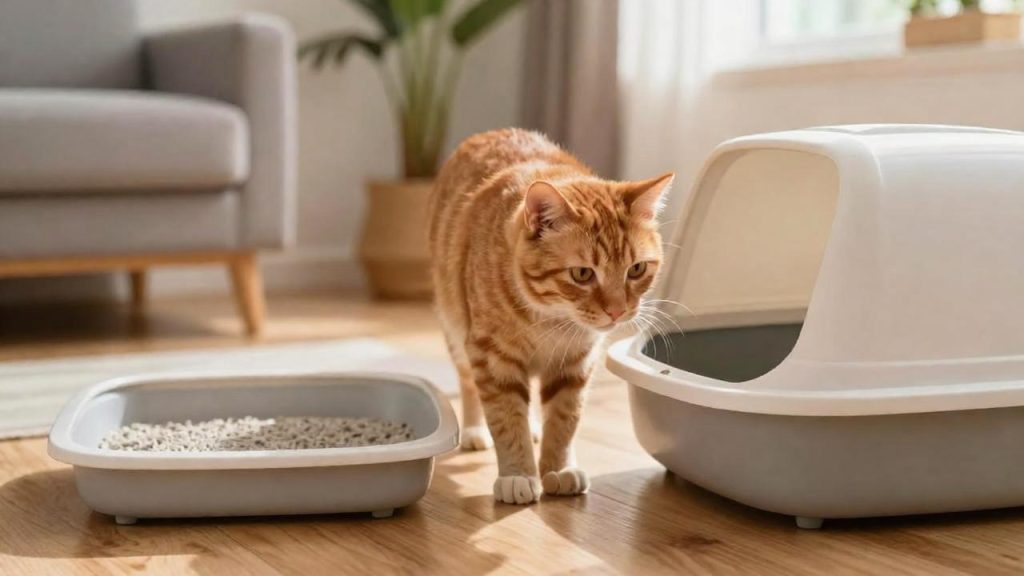
When I switched one of my cats from a traditional litter box to a semi-automatic litter box, I honestly expected everything to go smoothly. The new box looked cleaner, reduced scooping, and seemed much more comfortable from my perspective. My cat had a very different opinion.
Instead of walking in confidently, she circled around it several times, sniffed every corner, stepped inside with only her front paws, then immediately jumped back out. For nearly two days she refused to use it unless I placed her old litter box beside it. That experience taught me something many first-time owners don’t realize—cats don’t dislike change because they’re stubborn. They simply rely on familiarity to feel safe.
If you’re wondering how long it takes a cat to adapt to a semi-automatic litter box, the answer depends on several factors, including age, personality, previous litter box habits, and how the transition is introduced. Most healthy adult cats begin accepting a new litter box within three days to two weeks, while cautious or senior cats may need a little longer.
The good news is that there are several simple techniques that can make the adjustment much easier without forcing your cat into an uncomfortable situation.
Most Cats Need Time Because They Trust Familiar Smells More Than New Objects
Cats experience the world differently than we do. While humans often judge something by appearance, cats rely heavily on scent. A brand-new litter box may smell like plastic, cardboard packaging, or factory materials. Even if those odors seem mild to us, they can feel completely foreign to a cat.
That unfamiliar scent is often enough to make a cautious cat hesitate.
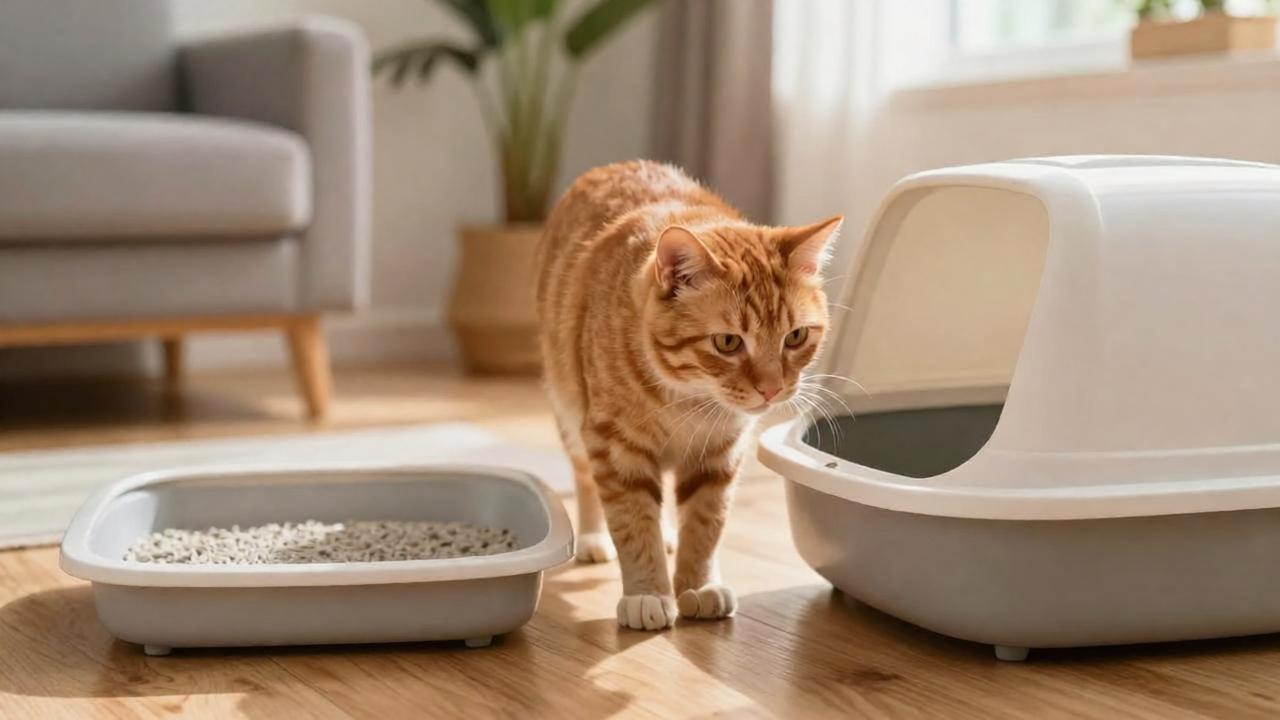
This is one reason experienced cat owners recommend avoiding a complete replacement on day one. Instead, place the semi-automatic litter box next to the existing one. Let your cat investigate it freely without pressure.
I usually leave both litter boxes available for at least a week. During that time, curiosity naturally takes over. Many cats eventually step inside simply because they want to inspect something new in their territory.
One trick that worked surprisingly well for me was transferring a small amount of used litter into the new box. Although it doesn’t look particularly appealing, it instantly makes the new litter box smell familiar. From the cat’s perspective, that scent communicates, “This is still my bathroom.”
Your Cat’s Personality Often Matters More Than Age
People often ask whether kittens or adult cats adapt faster. In reality, personality usually has a much bigger influence.
Confident and curious cats sometimes accept a new litter box within a single day. They’ll inspect it, paw at the litter, and begin using it almost immediately. More cautious cats prefer to observe first. They may walk around the box for several days before finally stepping inside.
Senior cats can also adapt successfully, but comfort becomes especially important. If climbing into the litter box feels difficult or the entrance is higher than they’re used to, they may avoid it regardless of whether it’s semi-automatic.
I’ve noticed that shy rescue cats often spend more time watching than acting. They seem to collect information before making a decision. Giving them extra patience almost always produces better results than trying to force interaction.
Keeping the Cleaning Function Turned Off Makes the First Week Less Stressful
Many semi-automatic litter boxes include moving parts that separate waste after use. While this feature is exactly why many owners buy them, it’s also one of the biggest reasons some cats become nervous during the first few days.
Imagine walking into what you believe is your safe bathroom, only to hear unfamiliar mechanical sounds shortly afterward. Even gentle movement can surprise a cautious cat.
Whenever I introduce a new semi-automatic litter box, I disable any automatic cleaning feature during the first week. I simply scoop it manually while allowing my cat to become comfortable entering, digging, turning around, and leaving without any unexpected movement.
Only after my cat is consistently using the litter box without hesitation do I slowly introduce the cleaning mechanism.
Leaving the Old Litter Box Available Prevents Unnecessary Stress
One mistake I see fairly often is removing the old litter box the same day the new one arrives. It’s understandable—after all, the goal is to encourage the cat to use the upgraded box. Unfortunately, this approach can backfire.
Cats generally don’t respond well to being forced into unfamiliar situations. If their trusted bathroom suddenly disappears, some cats may hold their urine for longer than they should, while others begin searching for alternative places around the house. Neither outcome is something any cat owner wants.
I prefer to think of the transition as offering a new option rather than replacing an old one overnight.
For the first several days, I place both litter boxes in the same room. They’re close enough for my cat to compare them but far enough apart that each still feels like its own space. Gradually, I notice fewer visits to the old box and more curiosity toward the semi-automatic one.
Once my cat consistently chooses the new litter box for several days in a row, I quietly remove the old one. Because the decision feels natural to the cat, there’s rarely any resistance.
Small Rewards Can Build Positive Associations Much Faster
Cats don’t always respond to praise the way dogs do, but they absolutely remember positive experiences.
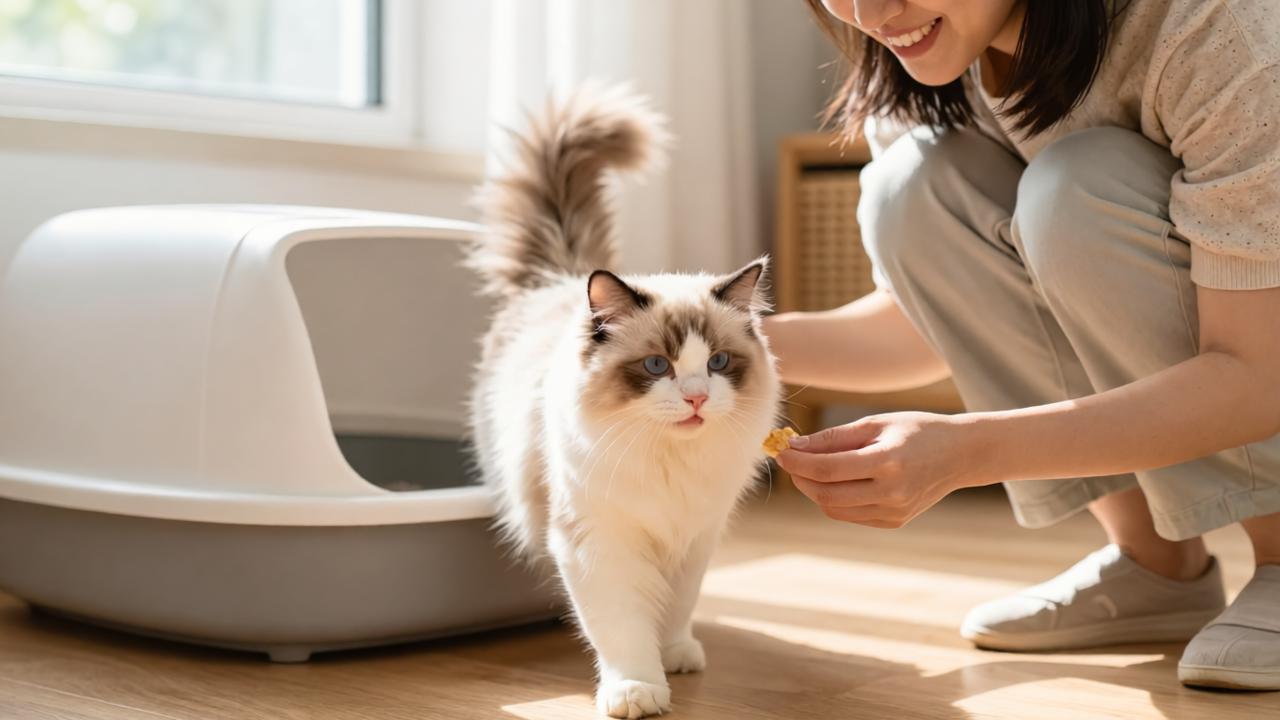
Whenever my cat voluntarily walked into the new litter box—even if she was only sniffing around—I stayed calm and allowed her to explore at her own pace. If she eventually used it successfully, I rewarded her with one of her favorite treats a few minutes later.
The timing matters.
I don’t hand over a treat while she’s still inside the litter box because I don’t want her to associate eating with the bathroom area. Instead, I wait until she’s finished and relaxed before offering a small reward or a few minutes of interactive play.
Within several days, many cats begin connecting the new litter box with positive experiences instead of uncertainty.
Keeping the Same Litter Helps Eliminate One Major Variable
Another lesson I learned was not to change too many things at once.
If you’re introducing a new litter box, keep using the same litter your cat already likes. Changing both the box and the litter simultaneously creates two unfamiliar experiences instead of one.
Cats notice differences in texture just as much as scent. A fine clay litter feels very different from larger pellets or crystal litter beneath their paws. If both the surface and the box suddenly change, your cat has twice as many reasons to hesitate.
After your cat becomes comfortable using the semi-automatic litter box, you can gradually experiment with different litter types if needed. One transition at a time almost always produces better results.
Multi-Cat Homes Usually Need More Than One Litter Box During the Transition
If you live with multiple cats, patience becomes even more important.
Not every cat adapts at the same speed. One may happily begin using the semi-automatic litter box on the first day, while another watches from across the room for an entire week before getting close.
I always make sure each cat still has easy access to a litter box it already trusts. Competition or waiting in line only increases stress, especially for shy cats.
A good guideline is to maintain at least one litter box per cat, plus one extra whenever possible. During the transition, this gives every cat enough choices without feeling pressured.
Interestingly, I’ve noticed that confident cats often become teachers without realizing it. Once one cat starts using the new litter box comfortably, another cat frequently follows after watching the routine several times. Social learning isn’t guaranteed, but it happens more often than many owners expect.
Several Common Mistakes Can Delay the Entire Adjustment Process
Most adaptation problems aren’t caused by the litter box itself. They’re usually caused by introducing it too quickly.
Running the cleaning mechanism immediately, switching litter brands on the same day, moving the litter box to a completely different room, or cleaning away every familiar scent can all make the transition more difficult.
Another mistake is physically placing a reluctant cat inside the litter box over and over. While it may seem helpful, many cats interpret this as being trapped, which can create negative associations that last much longer than the initial hesitation.
Instead, let curiosity work in your favor. Cats naturally investigate new objects when they feel safe enough to do so. Your job is simply to create an environment where that curiosity can develop without pressure.