If you’ve ever stood in the pet aisle staring at dozens of bags of cat litter, you’re definitely not alone. When I adopted my first cat, I assumed litter was just… litter. I grabbed the first bag that looked decent and figured my cat wouldn’t care. I couldn’t have been more wrong.
Over the years, I’ve tried clay litter, tofu litter, pine pellets, corn litter, walnut litter, crystal litter, and a few blends that claimed to combine the best of everything. Some were excellent, some were disappointing, and a few simply didn’t match my cat’s preferences.
One thing I’ve learned is that there isn’t a single “best” cat litter. The right choice depends on your cat’s habits, your budget, how much dust you’re willing to tolerate, whether odor control is important, and even how easy you want cleaning to be.
In this guide, I’ll compare the most common types of cat litter you’ll find today, explain what they’re made from, discuss their typical colors and price ranges, and share my honest thoughts about where each one performs well.
Clay litter remains the most common option because it’s affordable and familiar.
Clay litter is still the most widely used cat litter in North America. Most clumping clay litter is made from bentonite clay, a naturally occurring absorbent mineral that expands when it contacts moisture.
Typical colors include:
- Light gray
- Medium gray
- Off-white
- Small blue or green deodorizing granules in some premium products
Typical retail prices in the U.S. generally range from about $0.40 to $1.20 per pound, depending on the brand, fragrance, dust control, and packaging size.
Pros
- Excellent clumping ability
- Easy daily scooping
- Good odor control
- Available almost everywhere
- Usually the most economical choice
Cons
- Can be dusty, especially lower-priced products
- Heavy to carry
- Tracks easily on cats’ paws
- Not biodegradable
Personally, I still think a high-quality unscented clay litter offers one of the best balances between cost and performance for households with one or two healthy adult cats.
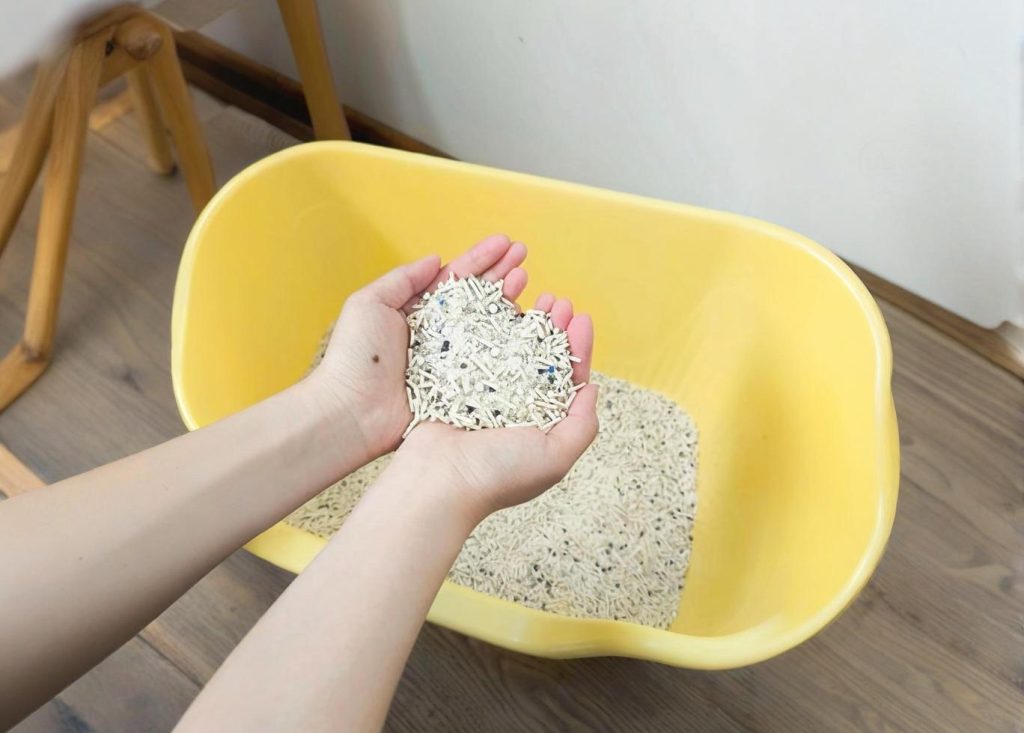
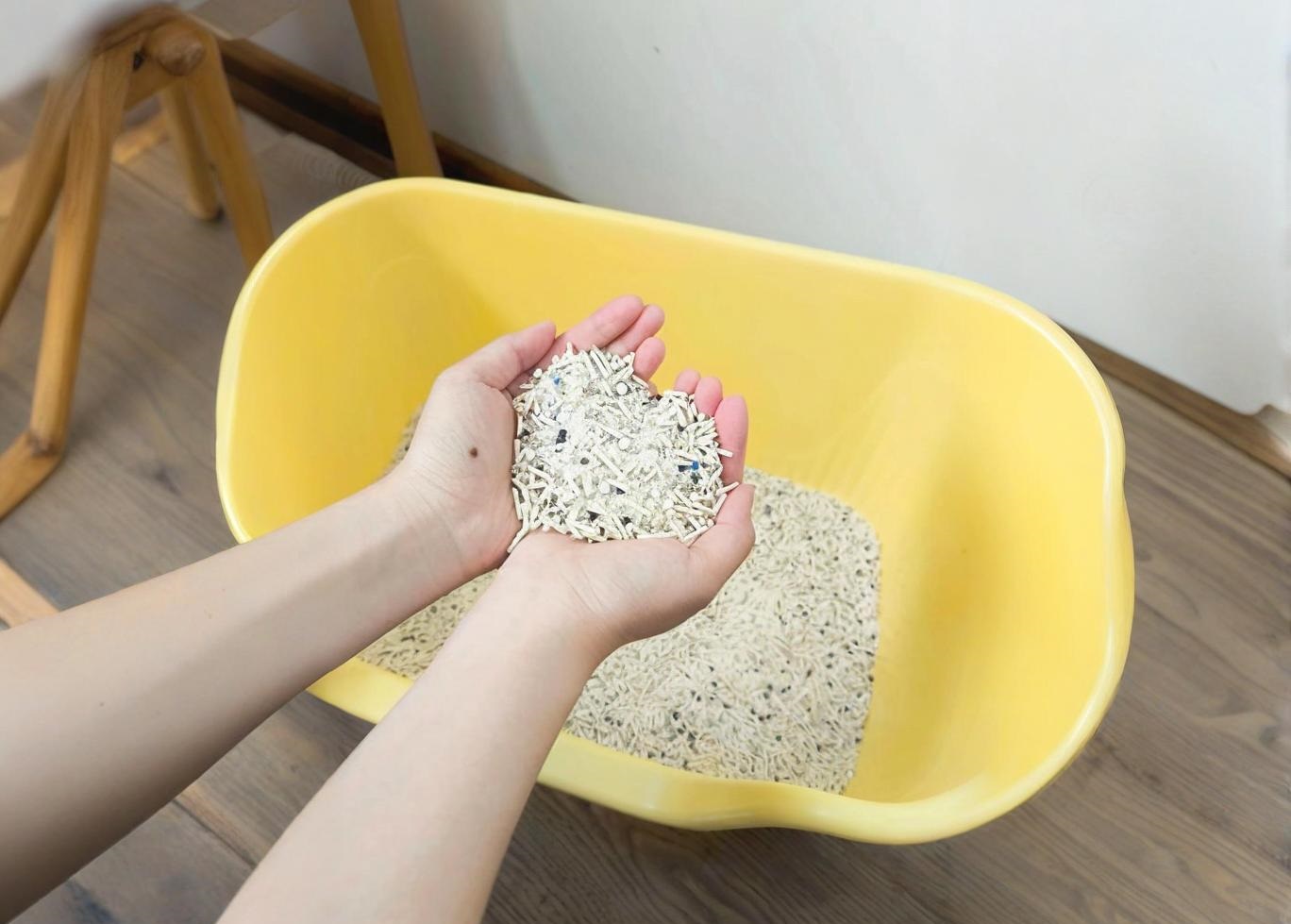
Tofu litter has become increasingly popular among cat owners looking for a cleaner and more sustainable choice.
Tofu litter is usually produced from soybean fiber left after making soy products. Many manufacturers also blend pea fiber, cornstarch, or natural starches to improve clumping performance.
The most common colors include:
- Natural beige
- Cream white
- Light yellow
- Green (tea-infused varieties)
- Pink or lavender for scented versions
Typical prices generally fall between $1.20 and $3.00 per pound, making tofu litter noticeably more expensive than standard clay litter.
Pros
- Low dust
- Lightweight
- Strong clumping
- Often biodegradable
- Generally easier to dispose of than clay
Cons
- Higher purchase price
- Quality varies considerably between brands
- Some cats need time to adjust to the texture
I’ve found tofu litter especially useful for apartments because it tracks less than many clay products and tends to produce less visible dust around the litter box.
Silica crystal litter absorbs moisture differently than traditional clumping litters.
Crystal litter is made from silica gel beads rather than traditional sand-like particles. Instead of forming clumps, the crystals absorb liquid into tiny internal pores while gradually evaporating moisture.
Typical colors include:
- Clear
- White
- Blue crystals
- Mixed white and blue blends
Typical prices generally range from $1.50 to $3.50 per pound.
Pros
- Excellent moisture absorption
- Very lightweight
- Long replacement intervals
- Good odor control when maintained properly
Cons
- Doesn’t clump like clay
- Some cats dislike walking on the crystals
- Can become saturated if not stirred regularly
- Usually more expensive
I know several cat owners who love crystal litter, but my own cat never seemed enthusiastic about the texture. Every cat has preferences, and this is one material where acceptance can vary quite a bit.
Pine pellet litter offers a natural wood-based alternative.
Pine litter is typically manufactured from compressed kiln-dried pine sawdust. Instead of clumping, the pellets break down into sawdust after absorbing urine.
Most pine litter appears in:
- Light brown
- Natural wood color
- Golden tan
Typical prices usually range from $0.50 to $1.50 per pound.
Pros
- Very little dust
- Natural pine scent
- Renewable raw material
- Lightweight compared to clay
Cons
- Requires a different cleaning routine
- Not all cats like pellet-shaped litter
- Doesn’t form traditional clumps
Pine litter tends to work well for owners who prioritize natural materials and minimal dust over perfect clumping performance.
Corn litter combines renewable ingredients with familiar clumping performance.
Corn litter is generally made from processed whole-kernel corn or corn fiber and often behaves similarly to clumping clay.
Typical colors include:
- Yellow
- Golden tan
- Light beige
Retail prices commonly range from $1.00 to $2.50 per pound.
Pros
- Renewable material
- Good clumping ability
- Lightweight
- Usually produces less dust than clay
Cons
- Generally costs more than clay litter
- Performance varies by manufacturer
- May track outside the litter box
In my experience, corn litter feels surprisingly similar to traditional clumping litter while being noticeably lighter to carry.
Walnut litter makes use of recycled agricultural materials.
Walnut litter is produced from crushed walnut shells, giving it a naturally dark appearance.
Typical colors include:
- Dark brown
- Chocolate brown
- Nearly black
Typical prices generally range from $1.00 to $2.80 per pound.
Pros
- Natural appearance
- Renewable source material
- Usually lower dust than clay
- Reasonable odor control
Cons
- Dark color can make waste slightly harder to spot
- Some products don’t clump as firmly as bentonite clay
Mixed-material litters try to balance the strengths of several ingredients.
Many newer products combine two or more materials, such as clay with activated carbon, tofu with bentonite, or plant fibers with mineral additives.
These hybrid formulas often aim to improve odor control, reduce dust, or create stronger clumps while keeping costs reasonable.
Prices vary widely but generally fall between $1.00 and $3.00 per pound, depending on the formulation.
I’ve noticed that some blended litters perform exceptionally well, but others simply combine the disadvantages of multiple materials. Reading the ingredient list is usually more helpful than relying on marketing claims alone.
Choosing the right litter often depends more on your cat than the packaging.
If you have a kitten, a healthy adult cat, multiple cats, or a senior cat, your ideal litter may be different.
- Budget-conscious households: High-quality clumping clay litter.
- Apartment living: Low-dust tofu or premium clay litter.
- Cats sensitive to dust: Tofu, pine, or crystal litter may be worth trying.
- Multi-cat homes: Strong-clumping clay or premium blended formulas often make daily maintenance easier.
- Environmentally conscious owners: Tofu, pine, corn, or walnut litter are popular renewable options.
After trying several different materials over the years, I’ve come to appreciate that the “best” cat litter isn’t necessarily the most expensive or the newest product on the shelf. A litter that clumps well, controls odor effectively, produces minimal dust, and—most importantly—is accepted by your cat will usually provide the best long-term experience. If you’re introducing a new litter, switching gradually over several days can help many cats adjust more comfortably and reduce the chance they’ll avoid the litter box altogether.