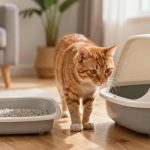
I never paid much attention to my cat’s bathroom routine until one afternoon when she walked into the litter box three different times within half an hour and came back out looking frustrated every single time. At first, I assumed she was just being picky about the litter or looking for the perfect spot. But after watching her closely, I realized she was trying to poop and simply couldn’t.
That experience completely changed how I look at litter box habits. Cats are incredibly good at hiding discomfort, and constipation is one of those problems that often develops quietly before owners realize something is wrong. By the time obvious symptoms appear, many cats have already been uncomfortable for several days.
The good news is that mild constipation can often be recognized early if you know what behaviors to watch for. Learning the difference between normal bathroom habits and warning signs can help you make better decisions for your cat before the problem becomes more serious.
After caring for my own cats and talking with veterinarians over the years, I’ve noticed that many constipated cats behave in surprisingly similar ways.
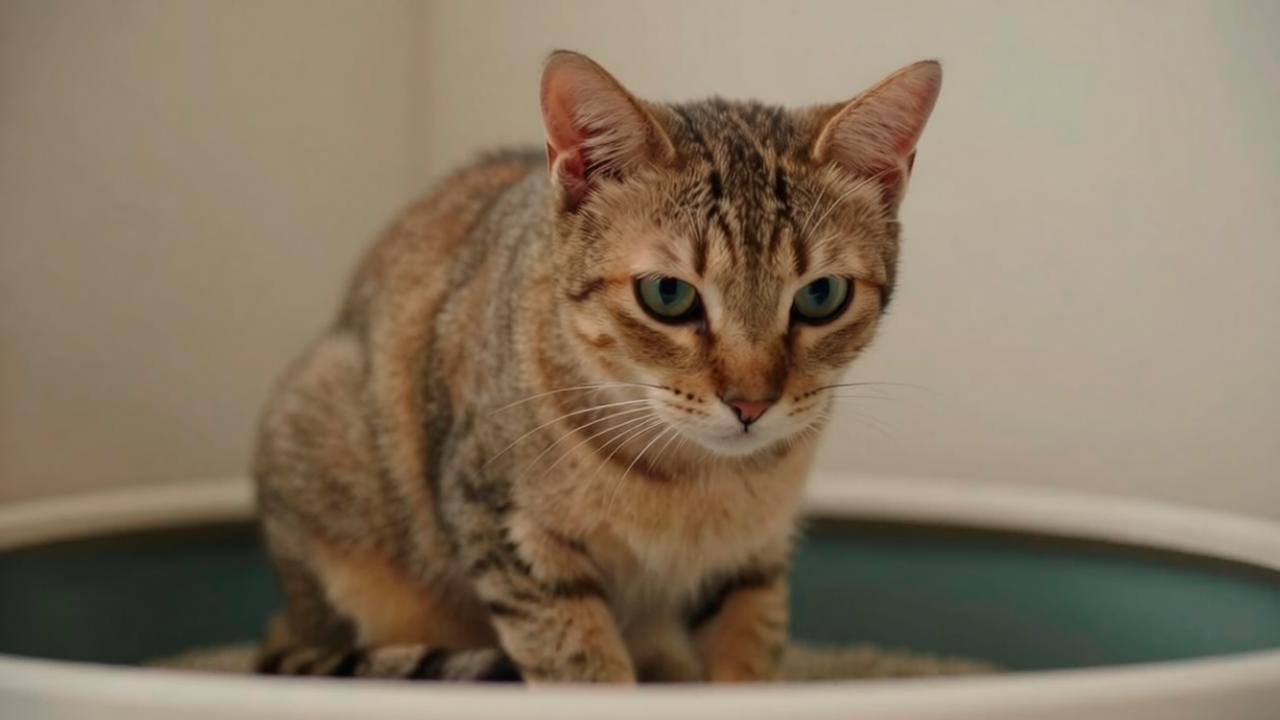
Repeated trips to the litter box usually mean something isn’t right.
One of the first things I noticed was how often my cat visited the litter box without actually producing much.
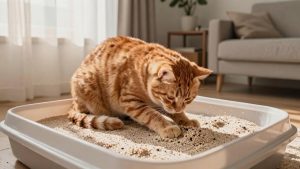
A healthy cat usually enters the litter box, digs around a little, finishes pooping within a short time, covers everything up, and walks away. The entire process is generally uneventful.
When constipation starts developing, that routine often changes.
Your cat may enter the litter box several times during the day, squat for much longer than usual, leave with little or nothing behind, and then return again later to repeat the same process.
From a distance, it may even look like they’re simply being indecisive, but those repeated visits are often an early sign that stool is difficult to pass.
Many owners don’t notice this because cats usually use the litter box when nobody is watching. If you scoop the litter daily, however, you’ll quickly recognize when the number of bathroom visits no longer matches the amount being produced.
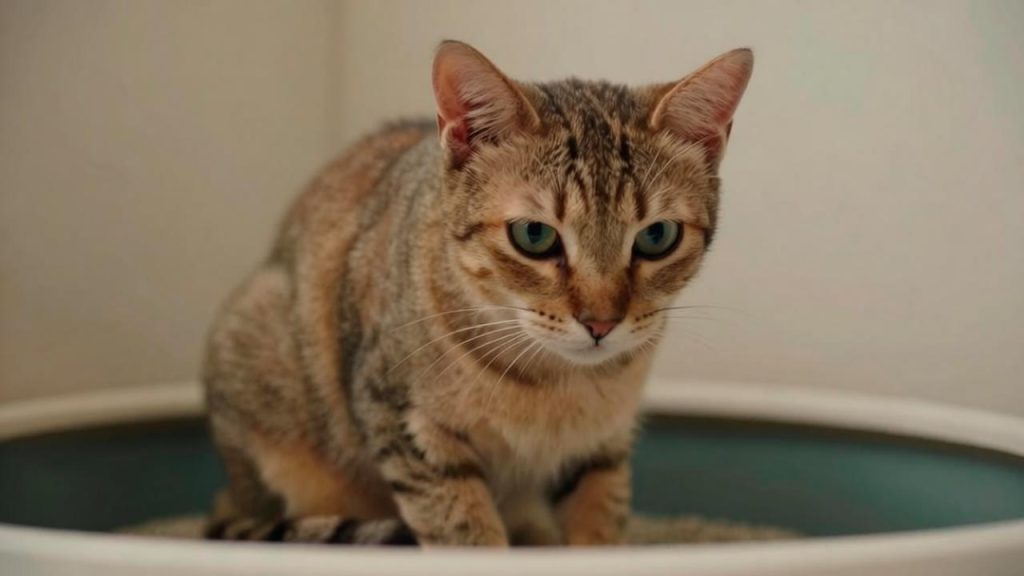
Straining is one of the clearest signs of constipation.
Healthy cats don’t normally struggle while pooping.
If your cat is pushing hard, holding a crouched position for an unusually long time, or visibly tightening the abdominal muscles without much success, constipation should immediately come to mind.
Sometimes you’ll notice the back legs trembling slightly from the effort. Other cats pause, stand up, reposition themselves, and try again.
It’s important to remember that straining can also occur with urinary problems, which are medical emergencies—especially in male cats.
If your cat repeatedly enters the litter box but produces no urine, cries in pain, or frequently licks the genital area afterward, contact your veterinarian immediately rather than assuming constipation is the cause.
Small, dry stools often appear before complete constipation develops.
Whenever I scoop the litter box, I take a quick look at what my cats leave behind.
It only takes a few seconds, but it can tell me a lot.
One of the earliest clues is that stools become noticeably smaller, harder, and drier than normal.
Instead of one well-formed piece, you may find several small pellets or short, firm segments.
This usually happens because the stool has remained inside the colon longer than it should. As time passes, more water gets absorbed, making the stool increasingly dry and difficult to push out.
Catching this stage early often prevents more serious constipation from developing.
Some cats lose interest in food because they simply feel too full.
I used to think constipation only affected the digestive system.
What surprised me was how much it could affect a cat’s appetite.
When stool builds up inside the colon, many cats simply don’t feel like eating. They may sniff their favorite food, take a few bites, and walk away.
Others become noticeably less interested in treats that they normally love.
This doesn’t happen to every constipated cat, but reduced appetite combined with straining should definitely catch your attention.
Less activity can be another subtle clue.
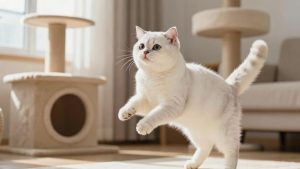
Most healthy cats naturally stretch, jump onto furniture, chase toys, and move around throughout the day.
When constipation causes abdominal discomfort, many cats become noticeably quieter.
My own cat spent more time sleeping and less time climbing onto her favorite window perch during one episode of mild constipation.
She wasn’t completely lethargic, but her usual playful energy was missing.
Some cats may even hesitate before jumping because tightening the abdominal muscles feels uncomfortable.
Owners sometimes mistake this for simple laziness when it’s actually mild pain.
Hydration plays a much bigger role than many owners realize.
One lesson I’ve learned is that many indoor cats simply don’t drink enough water.
Cats evolved from desert-dwelling ancestors and naturally have a relatively low thirst drive. Even healthy cats may consume less water than we expect.
When water intake stays low for several days, stool gradually becomes firmer as more moisture is absorbed inside the colon.
That’s one reason veterinarians often recommend increasing moisture intake before constipation becomes severe.
For many cats, adding canned food to the diet can significantly increase daily water consumption compared with feeding dry kibble alone.
I also noticed my cats drank more often after I placed water bowls in several different rooms instead of keeping just one near the kitchen.
Simple changes at home can often help mild constipation improve.
If my cat is otherwise acting normally, eating fairly well, and only showing early signs of constipation, I start by looking at the little things that might be contributing to the problem instead of immediately assuming something is seriously wrong.
The first thing I encourage is hydration. Fresh water should always be available, and I like to wash the bowls daily because my cats definitely seem more willing to drink from clean bowls. Some cats also prefer wide ceramic or stainless steel bowls instead of deep plastic ones.
Wet food is another change that has made a noticeable difference in my own home. Because canned food contains much more moisture than dry kibble, it naturally increases a cat’s overall water intake without forcing them to drink more.
Keeping the litter box clean is surprisingly important as well. Some cats dislike using a dirty litter box and may delay bowel movements longer than they should. That extra delay gives the colon even more time to absorb water from the stool, making it harder the next time they finally decide to go.
Regular movement helps keep the digestive system active.
I used to think exercise was mostly about helping cats avoid weight gain.
Over time, I learned that regular activity also helps stimulate normal intestinal movement.
Indoor cats that spend most of the day sleeping often have slower digestive transit than cats that stay active throughout the day.
Even ten or fifteen minutes of interactive play can encourage more natural body movement. Feather wands, toy mice, rolling balls, climbing trees, and food puzzles all help keep both the body and the mind engaged.
I’ve noticed that after an energetic play session, one of my cats often heads straight to the litter box a little while later. It isn’t guaranteed, of course, but maintaining daily activity seems to support healthy digestion over the long run.
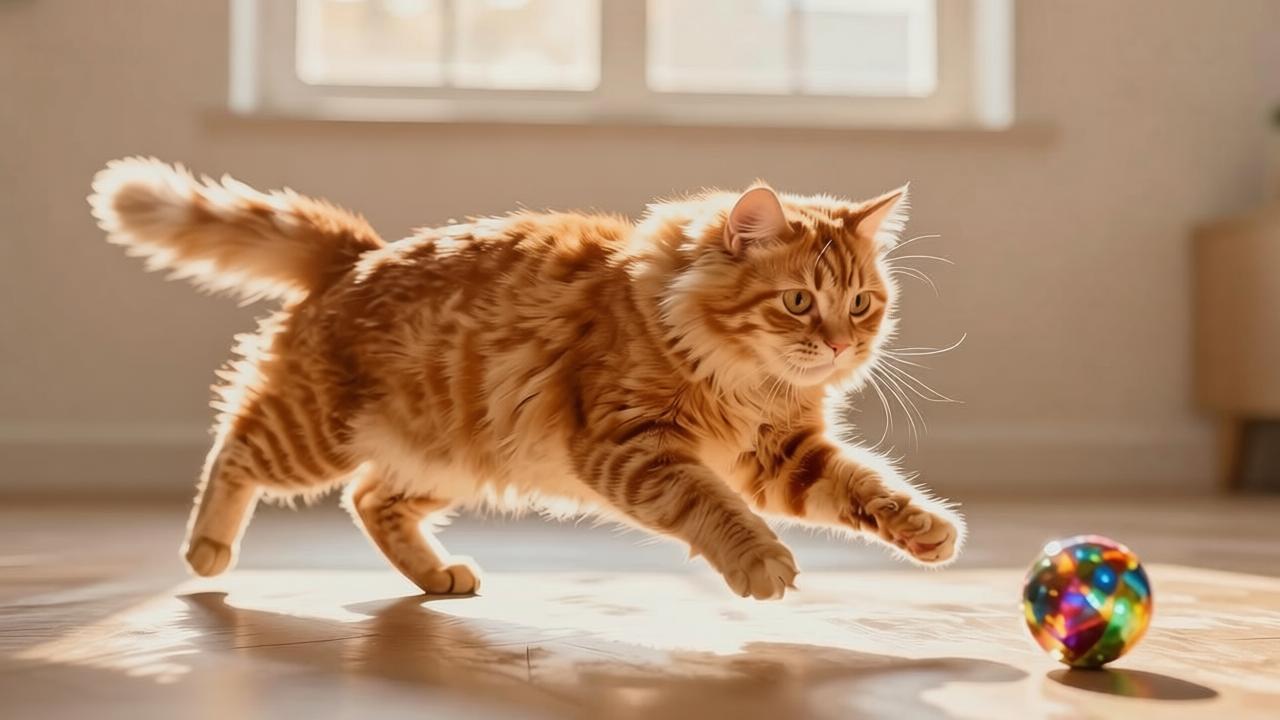
Hairballs can sometimes make constipation worse.
Cats naturally swallow loose fur every time they groom themselves.
Most of that hair passes through the digestive tract without causing problems, but during heavy shedding seasons, especially in long-haired breeds, extra fur can contribute to firmer stool or make constipation more noticeable.
Regular brushing has become part of my weekly routine, especially during spring and fall when shedding seems endless.
Besides reducing hair around the house, brushing removes loose fur before my cats have a chance to swallow it.
Some cats also benefit from veterinarian-approved hairball diets or supplements if hairballs become a frequent issue, but I always prefer discussing those products with my veterinarian before adding them to my cat’s routine.
Diet changes should be thoughtful instead of sudden.
When constipation appears, it’s tempting to immediately switch foods or start adding random home remedies found online.
I’ve learned that sudden diet changes can sometimes create an entirely new digestive problem.
If a food adjustment is needed, it’s usually better to transition gradually over several days. Depending on the individual cat, a veterinarian may recommend increasing dietary fiber, while another cat may actually benefit from a highly digestible, lower-residue diet instead.
That’s why there isn’t one “perfect” constipation diet for every cat. Age, medical history, weight, activity level, and the underlying cause all matter.
Whenever I’m unsure, I avoid experimenting too much on my own and ask for professional guidance instead.
Knowing when to call the veterinarian can prevent much bigger problems.
Mild constipation sometimes resolves with better hydration, improved diet, and a little extra activity, but not every case should be managed at home.
If your cat hasn’t produced a bowel movement for several days, repeatedly strains without success, vomits, refuses food, develops a swollen abdomen, becomes unusually lethargic, or appears to be in pain, it’s time to schedule a veterinary visit as soon as possible.
Cats can develop severe constipation, and in some cases the colon becomes so stretched that passing stool normally becomes increasingly difficult. Waiting too long can make treatment more complicated than it needed to be.
Your veterinarian may perform a physical examination, recommend imaging such as X-rays, evaluate hydration status, and determine whether medications, fluids, enemas, or other treatments are appropriate.
One thing I’ve learned is that laxatives or enemas made for people should never be given to cats unless a veterinarian specifically instructs you to do so. Some products that seem harmless for humans can be dangerous for feline patients.
Ever since my own cat experienced that first episode of constipation, I’ve paid much closer attention to what shows up in the litter box every day. It only takes a minute while scooping, but those small observations tell me a surprising amount about my cat’s health. A few extra trips to the water bowl, a little more playtime, regular brushing, and noticing subtle bathroom changes early have all become part of our routine. Most of the time, those simple habits help everything stay on track, and if something ever does seem off again, I know it’s worth taking seriously before a small problem has the chance to become a much bigger one.