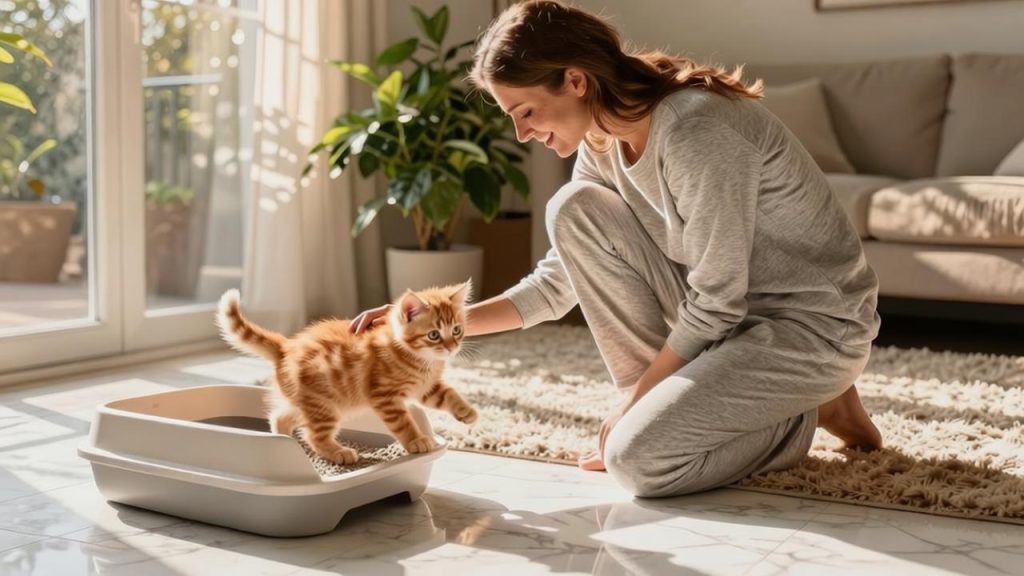
Many people are surprised when they learn that a cat’s bathroom habits can actually be influenced and shaped through training.
Unlike dogs, cats are often viewed as completely independent animals that simply do whatever they want. While cats certainly have a strong sense of independence, the truth is that much of their litter box behavior is influenced by environment, routine, habit, and positive reinforcement.
As someone who has lived with multiple cats over the years, I’ve seen firsthand how small changes made by owners can dramatically affect where, when, and how a cat chooses to eliminate.
Understanding why cats can be trained in this area helps explain many common litter box successes—and many litter box problems as well.
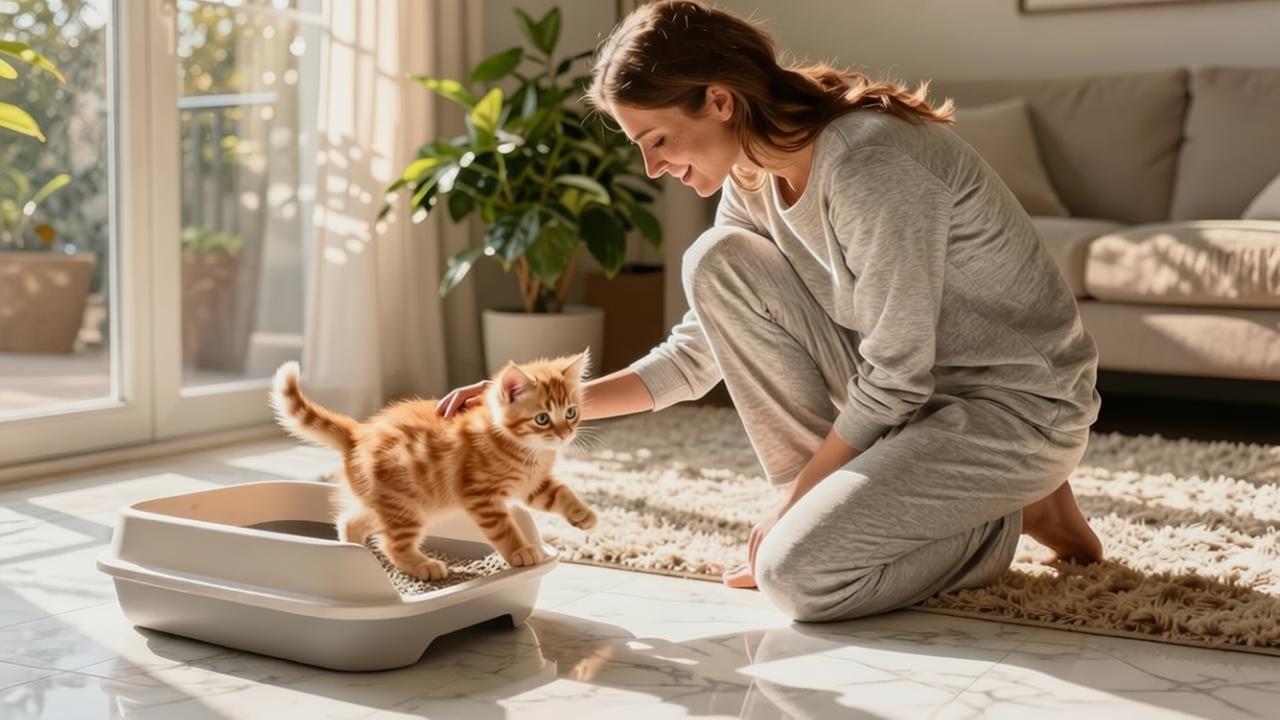
Cats are naturally programmed to learn bathroom habits.
One reason litter training works so well is that cats already have instincts that support it.
In the wild, felines often bury their waste to hide their presence from predators and competitors. This behavior isn’t something owners create from scratch. Instead, training usually works by encouraging natural instincts that already exist.
That’s why many kittens learn to use a litter box surprisingly quickly. The behavior feels natural to them once they understand where the appropriate bathroom area is located.
In other words, litter training is often less about teaching a completely new behavior and more about guiding an existing instinct in the right direction.
Routine plays a bigger role than most people realize.
Cats love predictability.
They prefer familiar places, familiar smells, and familiar daily patterns. When a litter box remains in the same location and is cleaned consistently, cats begin developing strong bathroom routines around it.
I often notice that cats tend to visit the litter box at similar times each day. Some prefer using it shortly after meals. Others seem to have a morning schedule or an evening routine.
Because cats are creatures of habit, repetition reinforces desired behavior. The more consistently they have positive experiences using the litter box, the stronger the habit becomes.
This is one reason frequent litter box changes can sometimes create confusion.
Cats respond to comfort, even if they don’t respond to commands.
Unlike dogs, cats usually aren’t motivated by direct obedience.
You can’t simply tell a cat where to go and expect immediate results.
However, cats are excellent at learning which choices feel comfortable and which ones don’t.
A clean litter box, suitable litter texture, adequate privacy, and easy access all encourage proper litter box use. When these conditions are met, cats often choose the litter box repeatedly because it provides the most comfortable option available.
From the cat’s perspective, the decision makes perfect sense.
If a litter box is dirty, noisy, difficult to access, or associated with negative experiences, the opposite can happen.
Positive experiences reinforce good bathroom behavior.
One misconception I occasionally hear is that cats can’t be trained because they don’t care about rewards.
In reality, cats absolutely learn from positive outcomes.
A kitten that consistently finds a clean, comfortable litter box begins associating that location with successful elimination. Over time, that association becomes stronger.
Many owners accidentally reinforce good litter habits without realizing it. Simply maintaining a predictable environment allows cats to build confidence in their bathroom routine.
Unlike punishment, which often creates fear or confusion, positive experiences encourage repetition.
Most litter box problems are actually behavior problems, not bathroom problems.
When a cat suddenly starts eliminating outside the litter box, many owners assume the cat is being stubborn.
In my experience, that explanation is rarely accurate.
Cats don’t typically wake up one day and decide to ignore years of successful litter box habits. More often, something in their environment has changed.
The litter may be different. The box may be dirty. Another pet may be creating stress. A new location may feel unsafe. Sometimes an underlying health issue is involved.
Because litter box behavior is learned and reinforced over time, disruptions can affect that behavior as well.
Understanding this principle makes troubleshooting much easier.
Kittens are often easier to train than people expect.
Many first-time cat owners worry about litter training, but healthy kittens are usually quick learners.
Most kittens naturally seek soft, diggable surfaces when they need to eliminate. A properly sized litter box with an appropriate litter type often provides exactly what they’re looking for.
Owners can help by placing kittens in the litter box after meals, naps, or play sessions. These are common times when elimination occurs.
The goal isn’t to force behavior but to help the kitten connect the correct location with the natural urge to go.
Once that connection forms, progress often happens surprisingly fast.
Training never completely stops.
One of the most interesting things I’ve learned about cats is that litter training isn’t a one-time event.
Even adult cats continue responding to environmental cues throughout their lives.
A cat that has used a litter box successfully for years can still develop new preferences, new concerns, or new challenges as circumstances change.
Senior cats may need easier access. Multi-cat households may require additional boxes. A move to a new home may temporarily disrupt established routines.
In that sense, litter training is really an ongoing relationship between the cat, the owner, and the environment.
The good news is that cats are often far more adaptable than they’re given credit for. By understanding their instincts, respecting their preferences, and providing a consistent bathroom setup, owners can influence litter box behavior in powerful ways. What looks like simple instinct on the surface is actually a combination of natural behavior, learned habits, environmental comfort, and daily reinforcement. That’s why cat bathroom habits can absolutely be shaped by people—and why thoughtful litter box management plays such an important role in successful cat ownership.